TBD and many others are ready to assist you.











Dry coolers
For industrial cooling, you can use Mark Dry Coolers. These compact units are available in various designs and capacities.
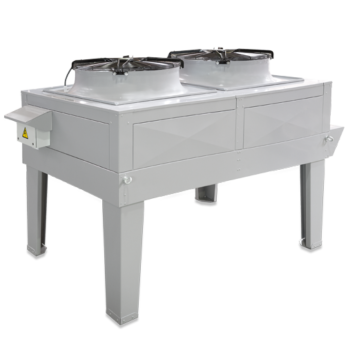
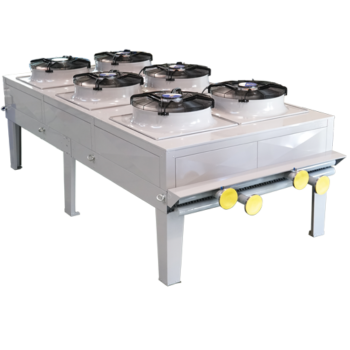
- Optimized EC fans
- Stainless steel housing
- Multi circuit water connection
- Compact
- Quiet
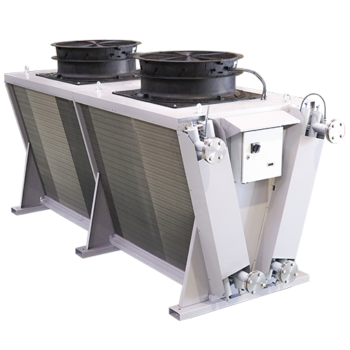
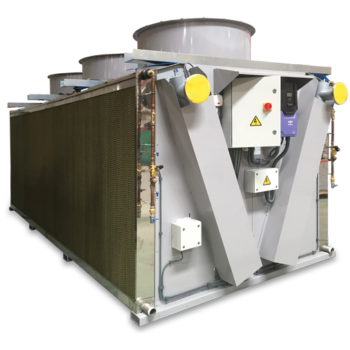
- Energy saving
- Water saving
- High efficiency evaporation
- Maintenance friendly
- Environmentally friendly
and many others, we guarantee reliability in every system we build.
to people.



What Are Dry Coolers?
Dry coolers are air-cooled heat exchangers used to remove heat from industrial and commercial processes without consuming water. These systems use the air around them to cool down. They are a cost-effective and eco-friendly option compared to traditional cooling towers.
Ideal for applications where water usage must be minimized or restricted, dry coolers are commonly found in:
- Power plants
- Manufacturing facilities
- Data centers
- HVAC systems
How Does a Dry Cooler Work?
A dry cooler system works by circulating a process fluid (often water or a glycol mixture) through finned coils. High-efficiency fans blow ambient air over the coils, removing heat from the fluid via sensible heat transfer. This heat is then released into the environment.
Key Benefits:
- No water consumption – avoids scaling and water treatment
- Low maintenance – no moving internal parts or refrigeration cycles
- High energy efficiency – fans only operate as needed
- Quiet operation – ideal for noise-sensitive environments
Standard Dry Coolers
Air cooled industrial chillers that operate in closed-loop systems using ambient air for heat rejection.
Adiabatic Dry Coolers
Enhanced with pre-cooling systems that spray water on pads to cool incoming air. This way they improve performance during high ambient temperatures.
Applications in HVAC and Industry
Dry coolers are versatile and compatible with a wide range of cooling applications:
HVAC Systems
- Heat rejection for chillers in air conditioning systems
- Reduces energy consumption in commercial ventilation setups
Process Cooling
- Efficient removal of heat from industrial processes
- Maintains consistent performance regardless of ambient temperature swings
Power Plants
- Ideal for dry cooling where water availability is limited
- Common in renewable energy facilities and combined heat and power systems
Why Choose Mark Climate Technology?
As experienced dry cooler manufacturers, we engineer our systems with efficiency, durability, and easy installation in mind.
Product Highlights:
- High-performance heat exchangers and EC fans
- Corrosion-resistant materials for long service life
- Modular design for flexible installation
- Quiet and vibration-free operation
- Suitable for both indoor and outdoor use
We offer both standard and adiabatic dry coolers to match your cooling requirements.
Energy Efficiency & Environmental Benefits
With rising energy and water costs, dry coolers provide long-term operational savings and sustainability. They contribute to:
- Reduced operating costs through intelligent fan control
- Improved energy efficiency by adapting to ambient conditions
- Water savings up to 95% compared to traditional cooling towers
Our systems are engineered for high cooling capacity even under demanding conditions. They can be used in combination with air handling units, chillers, or heat pumps.
Frequently Asked Questions
What is a dry cooler?
A dry cooler is an air-cooled device that removes heat from a liquid without using water. They are often used for industrial cooling or in combination with HVAC systems.
How does a drycooler differ from a chiller?
Unlike chillers, dry coolers don’t use refrigerants or compressors. They use ambient air to cool fluids, making them simpler and more energy-efficient.
Can dry coolers operate in all climates?
Yes, especially with adiabatic cooling enhancements, which boost performance during hot weather.
Looking for a Reliable Dry Cooling Solution?
Whether you’re installing a new dry cooling system or upgrading existing infrastructure, our energy-efficient solutions meet the highest standards for industrial dry coolers and HVAC applications.
Get in touch with our specialists today for tailored advice or a quote.